This article was published in the trade magazine Plastics Insight, issue 6/2026, www.plasticsinsights.com, © Carl Hanser Verlag
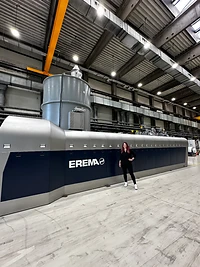
As global demand for plastics rises, so do the demands on the performance of recycling plants. EREMA is responding to this trend with a new plant size that, for the first time, achieves throughput rates of up to 4800 kg/h for polypropylene and 4000 kg/h for HDPE.
EREMA, based in Austria, looks back on a long history in plastics recycling. The company has been manufacturing recycling machines since 1983. While throughput was around 300 kg/h 40 years ago, capacities have risen steadily over the past decades. Above all, legal requirements and sustainability goals of global brands are driving demand for high-quality regranulates as well as for larger machine capacities. In the PET sector, EREMA has already completed several projects involving large-scale plants with throughputs ranging from 4000 to 6000 kg/h. Now, the machine manufacturer is applying its expertise to polyolefin recycling, as there is a growing need for increased throughput in both mechanical post-consumer recycling and chemical recycling.
However, the requirements for the systems and the process can vary significantly even with similar material streams, for example regarding quality requirements, filtration performance, melt temperature, and pressure. With the development of the new 2325 model in the INTAREMA® and CHEMAREMA® series, EREMA addresses the increased requirements in polyolefin recycling for both mechanical and chemical recycling.
Both versions of the 2325 model were tested in extensive trials at the EREMA Technical Center and optimized for their respective applications:
The technical features and innovations of the 2325 model are explained below.
Increased Decontamination Performance
In addition to extruder degassing, the Preconditioning Unit (PCU) contributes significantly to the decontamination of post-consumer plastics. In the PCU, the input material is cut, homogenized, heated, dried, and compacted using patented counter-current technology. The temperature behavior was specifically optimized in the design of the PCU with a diameter of 2.3 m. Special internal components in the rotating setup area enabled an even more homogeneous temperature distribution of the material throughout the entire volume. This leads to a significant increase in decontamination performance already within the PCU.
Modifications to the Extruder
When designing extruders, various functional zones must be dimensioned to perform different tasks, such as solid conveying, plasticization, pressure buildup, and mixing performance. According to the literature [1], scale-up rules exist for each of these functional zones, based on dimensionless parameters and theory of similarity. However, due to the different physical processes, this leads to contradictory scaling factors, as shown by the formula
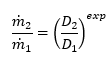
where ṁ1: throughput of the reference extruder; ṁ2: throughput of the scaled extruder, D1: screw diameter of the small extruder, D2: screw diameter of the large extruder, exp: exponent.
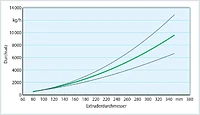
Figure 2 illustrates that the various scaling factors lead to significantly different throughput values. EREMA has developed a concept to optimally balance and implement these conflicting requirements in order to ensure both melting behavior and pressure buildup [2]. Conventional scaling rules [1] often do not account for the non-Newtonian flow behavior of plastic melts. Therefore, the only effective approach is to link the thermodynamic behavior with the rheological behavior of the polymer melts [3]. While these different scaling rules represent an attractive option for design, they present problems, particularly regarding melt performance.
To ensure the required melt capacity on this scale, targeted modifications to the extrusion process were necessary. Through targeted optimizations of the plasticizing technology for polyolefins, throughput rates of up to 4800 kg/h for PP and up to 4000 kg/h for HDPE were achieved. The newly developed EcoGentle® plasticizing concept ensures optimal interaction between the feed section and the screw, enabling the processing of PP, HDPE, and LDPE without any loss of throughput. The input material is melted particularly gently, thereby reducing the melt temperature and minimizing the thermal stress on the plastic melt. In multipurpose applications with HDPE and PP, this allows for a reduction in melt temperature of up to 13°C and in specific energy consumption at the extruder drive of up to 6%. This has a positive effect on process stability, reduces component wear, and extends their service life, which is directly reflected in lower production costs.
In addition to melt performance, degassing performance was also ensured on a large scale. Through geometric adjustments, the degassing volume was increased by 10 %. The size 2325 extruder screw has a diameter of 250 mm.
The proven basic principle of the TVEplus® and counter current technology, in which melt filtration takes place before extruder degassing, has also been implemented here. This system, combined with a high degree of automation thanks to the intelligent Smart Start® user interface — which enables intuitive control and recipe management — and the energy-saving ecoSAVE® technology, makes the INTAREMA® series particularly user-friendly and efficient.
Maximum Filtration Performance
At the end of the plasticizing zone, the melt is cleaned in the laser filter. With their robust construction and precise filtration, EREMA laser filters contribute significantly to the high stability of the entire system. During the test runs, an EREMA Laser Filter 406 in the Quattro version with a total filter area of 7800 cm² was used.
The new high-performance LF 812 filter, which EREMA introduced at K 2025, is also ideally suited for machines of this size: With a screen area twice that of the LF 406, the single version can handle up to 4800 kg of filtered melt per hour. For INTAREMA® 2325 the Laserfilter 812 is available in twin or triple versions.
Extensive Testing Confirms High Throughput with Consistent Quality
The EREMA Technical Center was bustling with activity as an INTAREMA® 2325 T-VE and the CHEMAREMA® 2325 T were built in parallel and extensively tested with various material streams. In total, over 700 tons of plastic waste were processed, including HDPE and PP regrind on the INTAREMA® 2325 T-VE and LDPE film on the CHEMAREMA® 2325 T.
The two plant types, INTAREMA® and CHEMAREMA® 2325, fit seamlessly into EREMA’s product portfolio and enable an even more targeted focus on the needs of recycling companies. The new machine size achieves higher throughputs while maintaining high output quality and stable processes. This is a decisive factor in supplying the required quantities of high-quality regranulates for premium end products containing recycled content. Thanks to the innovative EcoGentle® plasticizing concept, an improved setup in the PCU, and the use of proven EREMA technology, throughputs of up to 4800 kg/h are achieved. An additional advantage is the machine’s compact design and high cost-effectiveness.
Text: DI Dr. Sophie Pachner has been working in process engineering at EREMA since 2019, where she leads the development and innovation team; s.pachner@erema.at
PRESS CONTACT
Julia Krentl
Corporate Communication
EREMA Group
Unterfeldstraße 3
4052 Ansfelden, AUSTRIA
Phone: +43 732 3190 6092
Email: public.relations@erema-group.com

